News

Presenting our upstream covariate computation method at FOSS4G 2026 Hiroshima

Presenting our upstream covariate computation method at FOSS4G 2026 Hiroshima

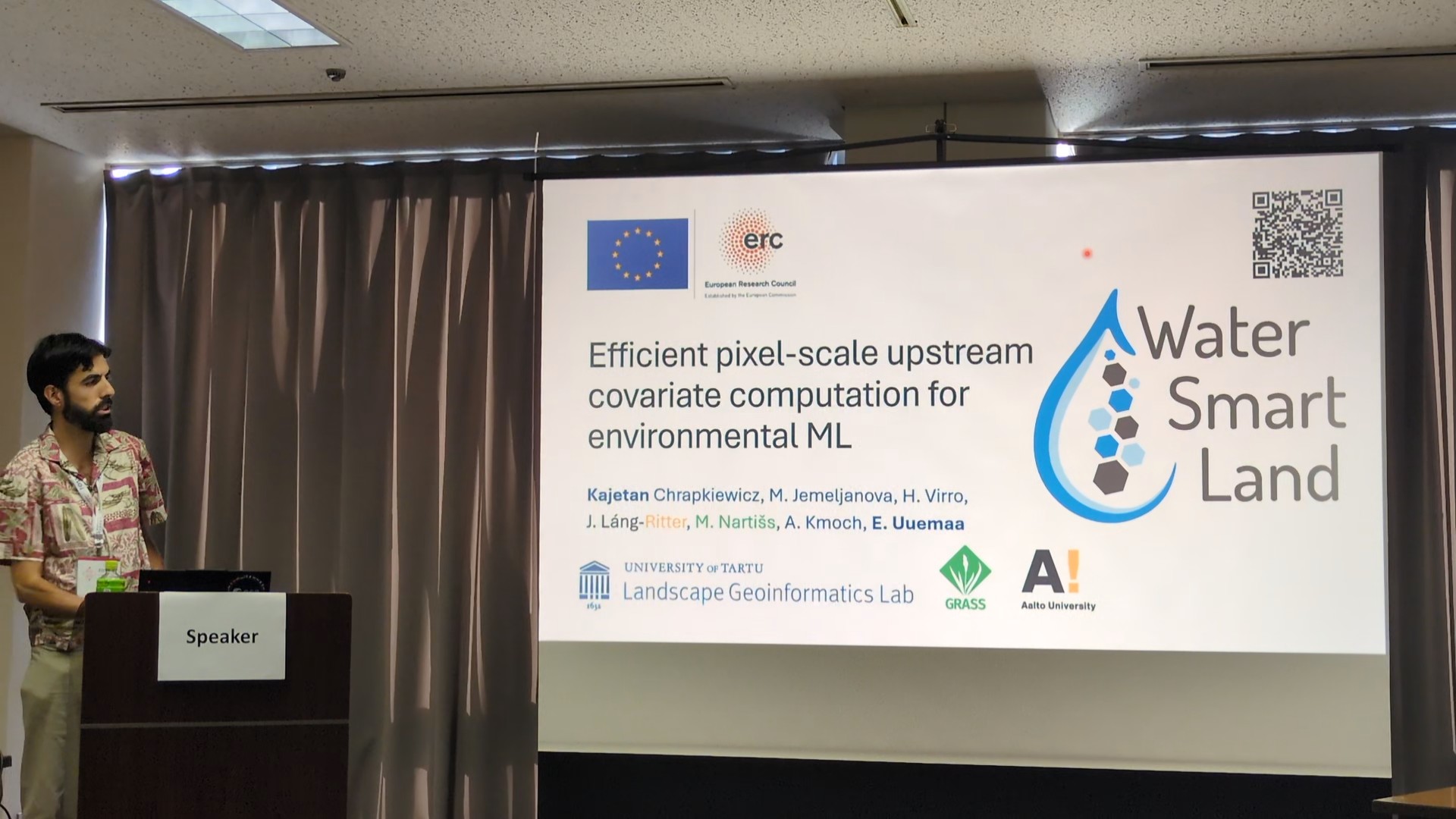
On 2 September 2026, Kajetan Chrapkiewicz of the WaterSmartLand team presented a talk, “Efficient pixel-scale upstream covariate computation for environmental machine learning”, in the General Session of FOSS4G 2026 — the global Free and Open Source Software for Geospatial conference held in Hiroshima from 1 to 3 September 2026.

The talk introduced a method developed by our team to compute a hydrologically conditioned data cube of environmental predictor variables, achieving orders-of-magnitude speed-ups over previous approaches and making a European-scale analysis possible.

Continue reading
WaterSmartLand at the AI for Good Summit

Evelyn Uuemaa presented “Improving environmental monitoring with GeoAI” at the AI for Good Summit in Geneva, as part of the session “GeoAI for our shared future: Geospatial foundation models and generative intelligence for people and the planet.”

The presentation highlighted how combining geospatial knowledge, Earth observation and artificial intelligence can open new opportunities for environmental monitoring and support better understanding of our changing environment.

The event also brought together researchers and practitioners from different communities. Coming directly after FOSS4G Europe, the contrast between the two events highlighted how different communities approach AI and technology — while also showing the great potential for bringing these perspectives together.

Continue reading
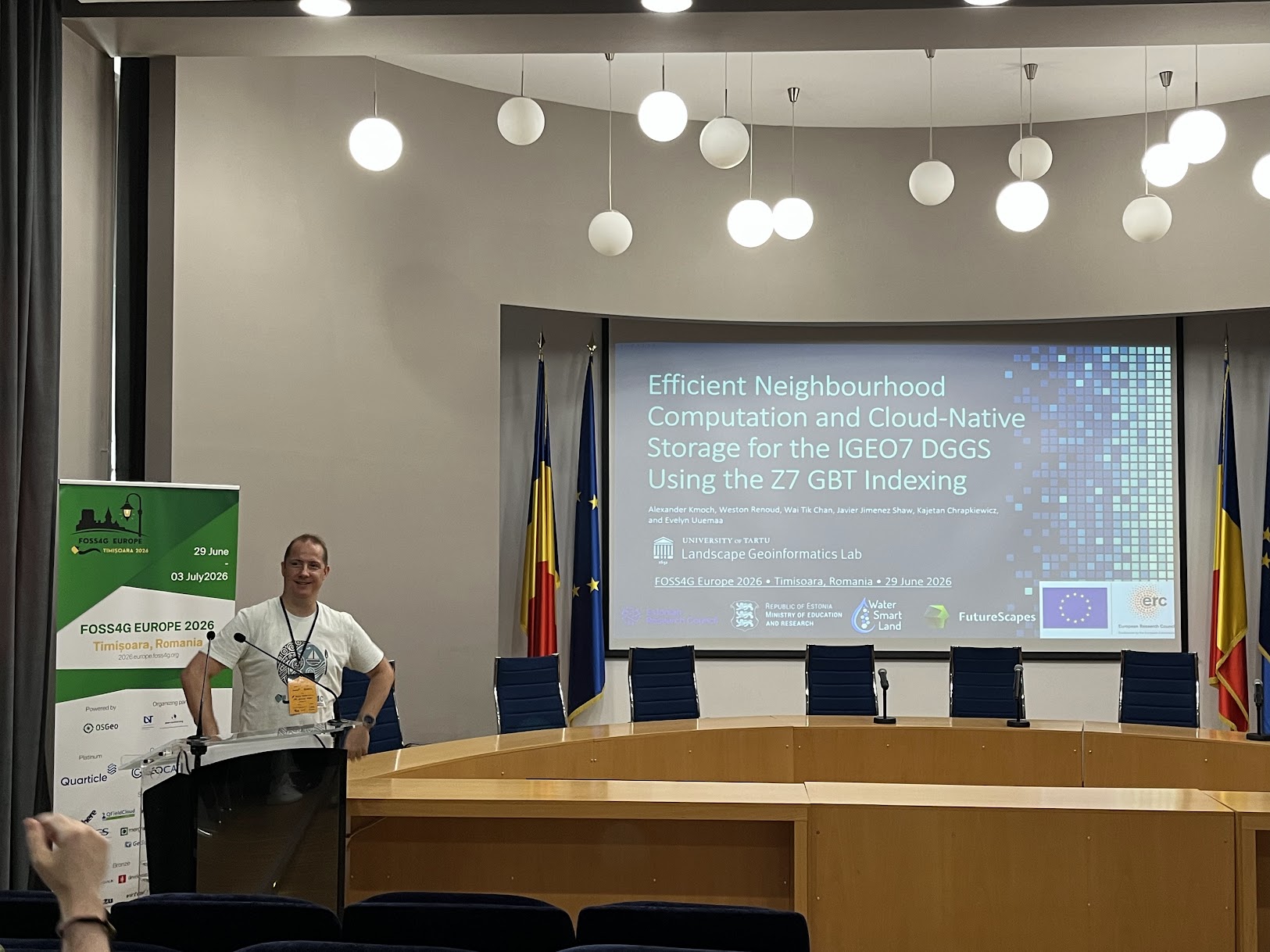
Presenting our new neighbourhood computation method at FOSS4G Europe 2026

Presenting our new neighbourhood computation method at FOSS4G Europe 2026

Alexander Kmoch from the WaterSmartLand team presented “Efficient Neighbourhood Computation and Cloud-Native Storage for the IGEO7 DGGS Using the Z7 GBT Indexing” at FOSS4G Europe 2026, held in Timișoara, Romania, from 29 June to 3 July 2026. FOSS4G Europe brings together the European open-source geospatial community to share new developments in geospatial software, open data and reproducible spatial analysis.

The presentation introduced recent developments in the IGEO7 Discrete Global Grid System (DGGS), focusing on efficient neighbourhood calculations and cloud-native storage of large geospatial datasets. The work contributes to building a scalable, reproducible and open geospatial data infrastructure for WaterSmartLand. Developing such solutions with open-source technologies is also increasingly important for European digital sovereignty, as it reduces dependence on proprietary technologies, supports interoperability and reuse, and allows research infrastructures and their underlying methods to remain transparent and accessible. These principles are also central to the EU’s new Open Source Strategy, which places open-source technologies at the heart of strengthening Europe’s technological sovereignty.

Continue reading
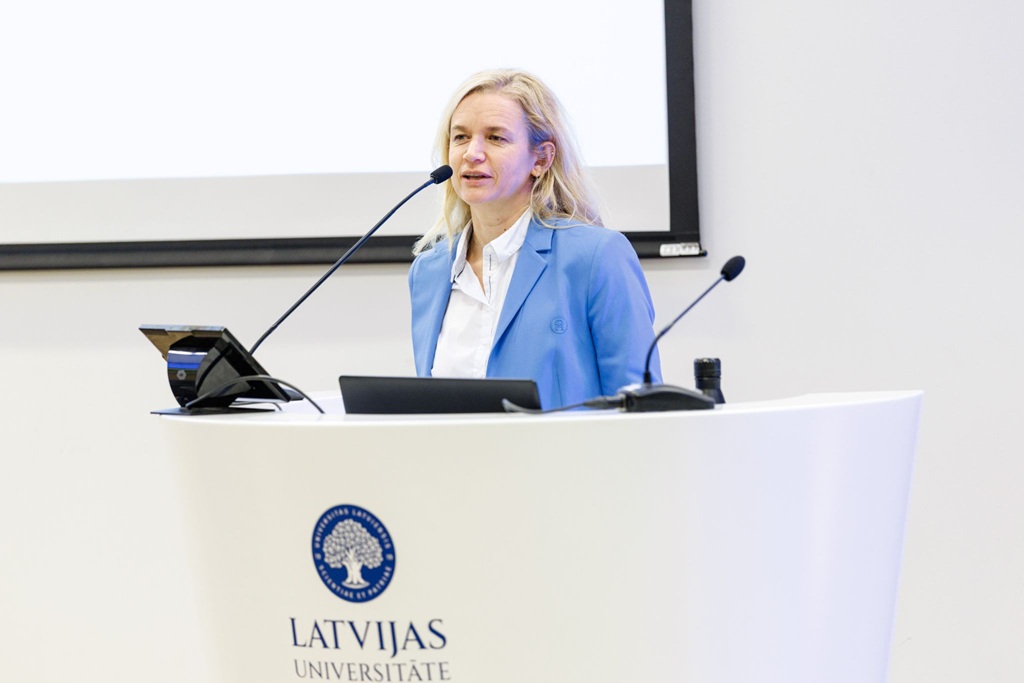
Keynote and panel discussion at the University of Latvia’s 84th International Scientific Conference

Keynote and panel discussion at the University of Latvia’s 84th International Scientific Conference

On 14 April 2026, the WaterSmartLand project was represented at the University of Latvia’s 84th International Scientific Conference, where a keynote presentation by Evelyn Uuemaa was delivered on the topic “From excellence to impact: designing research that matters?

The keynote drew on experiences from the ERC Consolidator Grant WaterSmartLand and the Centre of Excellence in Sustainable Land Use, focusing on how research impact is shaped already at the stage of defining research questions. The presentation emphasised that impact is not an add-on at the end of a project, but an integral part of research design that influences who the results may matter to.

Continue reading
Advances in Spatial Machine Learning Workshop Held in April 2026

Advances in Spatial Machine Learning Workshop Held in April 2026

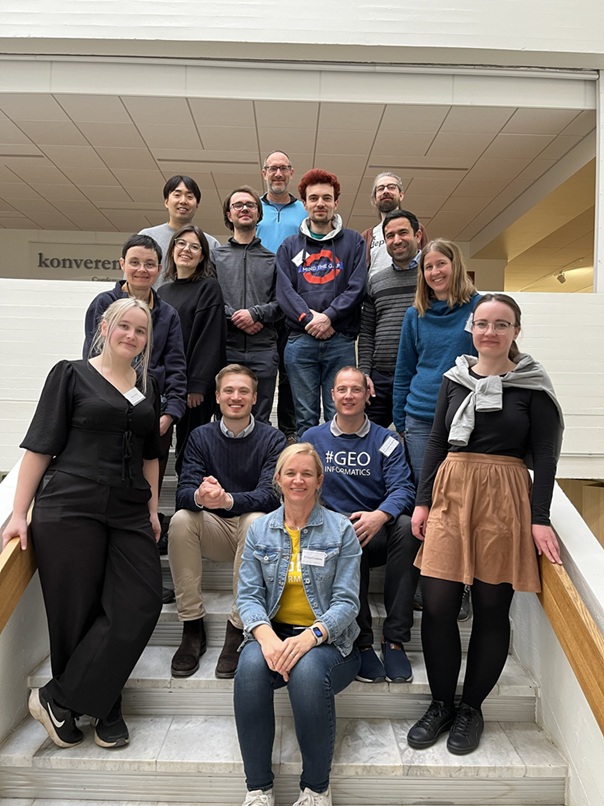
On 9–10 April 2026, we hosted the second Advances in Spatial Machine Learning workshop, bringing together leading researchers to discuss current challenges and emerging directions in the field.

The two-day event focused on open questions in spatial machine learning, including model validation, preservation of spatial patterns, explainable AI (xAI), and common methodological pitfalls. Participants also explored recent developments such as foundation models and discrete global grid systems (DGGS).

The workshop provided a collaborative and discussion-oriented environment, encouraging exchange of ideas across disciplines and highlighting key areas for future research. It also contributes to advancing the spatial machine learning modelling approaches used in the WaterSmartLand project.

Continue reading
Visiting New Zealand Bioeconomy Institute and Earth Sciences New Zealand to discuss our work on DGGS and water quality modelling

Visiting New Zealand Bioeconomy Institute and Earth Sciences New Zealand to discuss our work on DGGS and water quality modelling

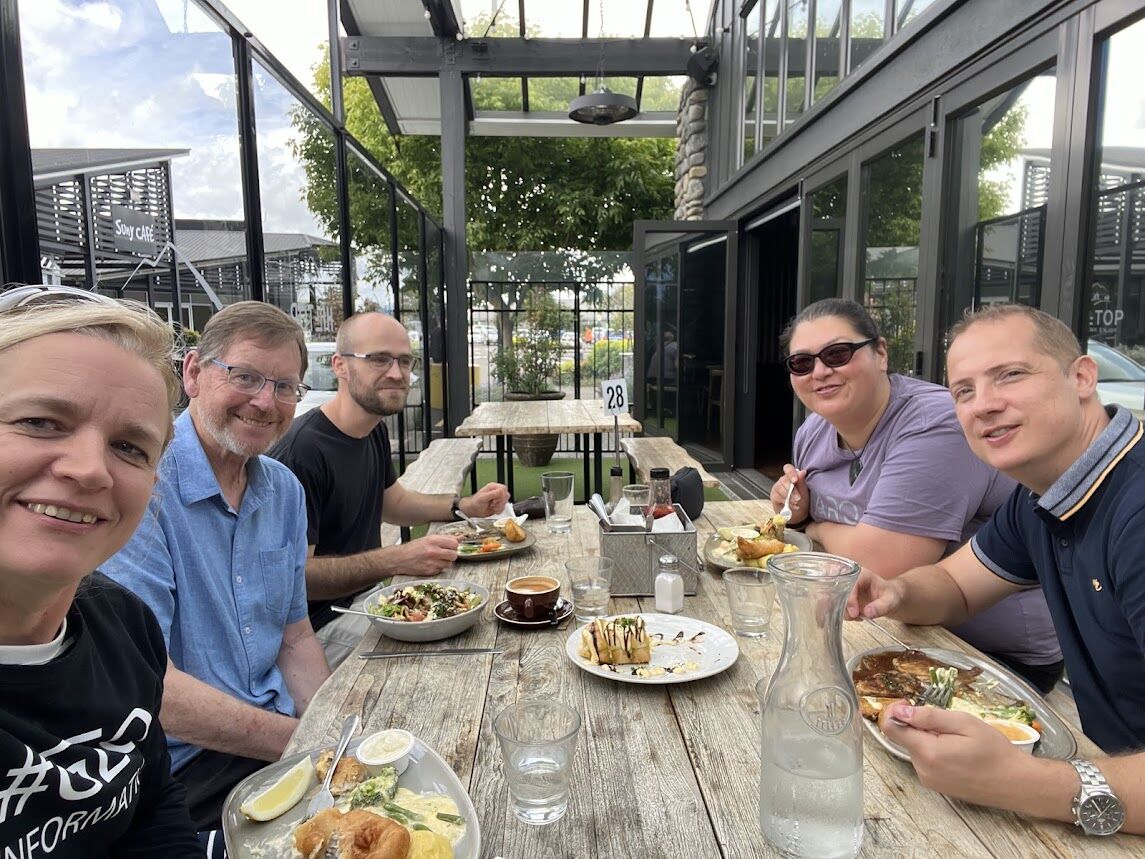
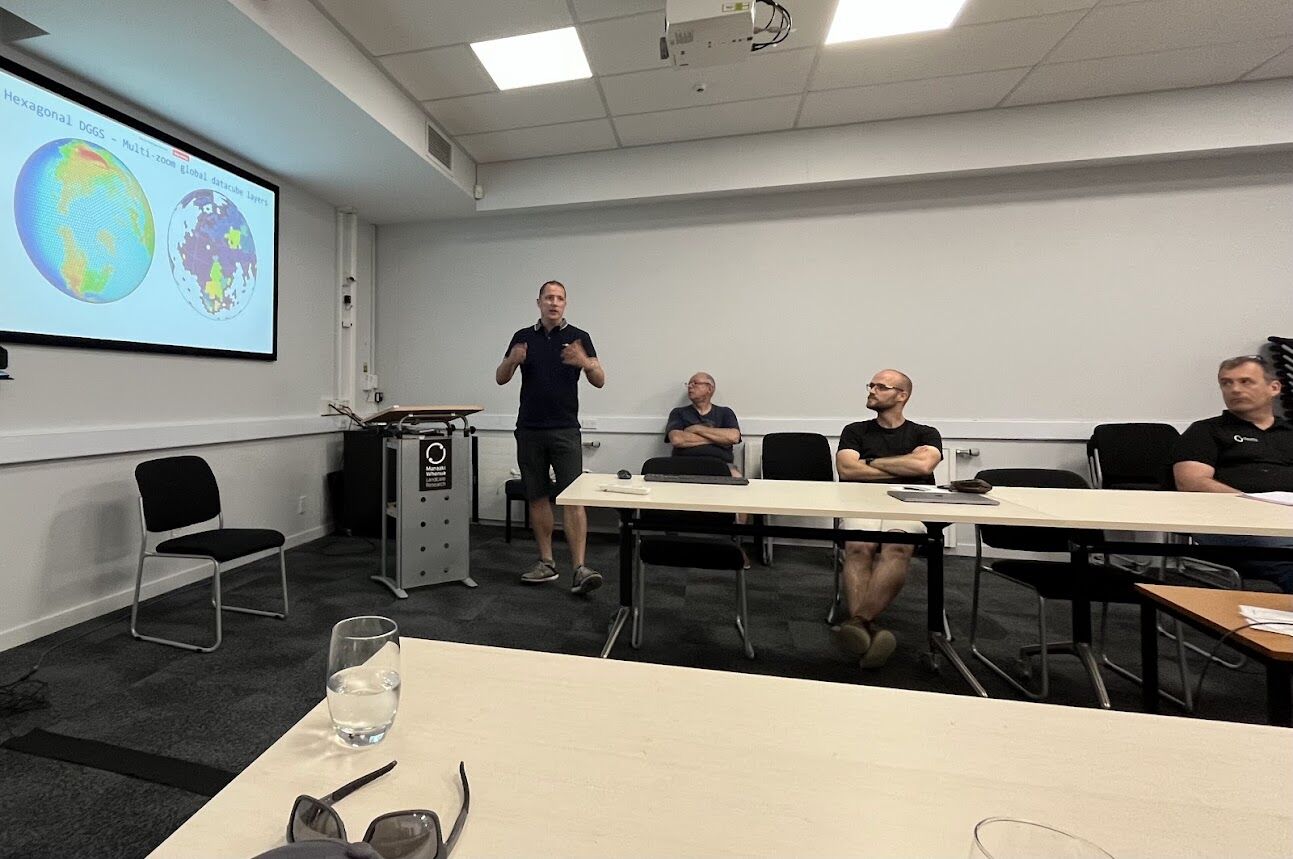
In the end of November 2025 Evelyn Uuemaa and Alexander Kmoch visited the New Zealand Institute for Bioeconomy Science Limited (formerly Manaaki Whenua Landcare Research) in Palmerston North.

It was great to explore ways to enhance the efficiency of geospatial data use in environmental research, and we had productive discussions on how to use Discrete Global Grid Systems for mapping and analysing different environmental phenomena.

Alexander Kmoch presenting DGGS.

Continue reading